Food & Agriculture
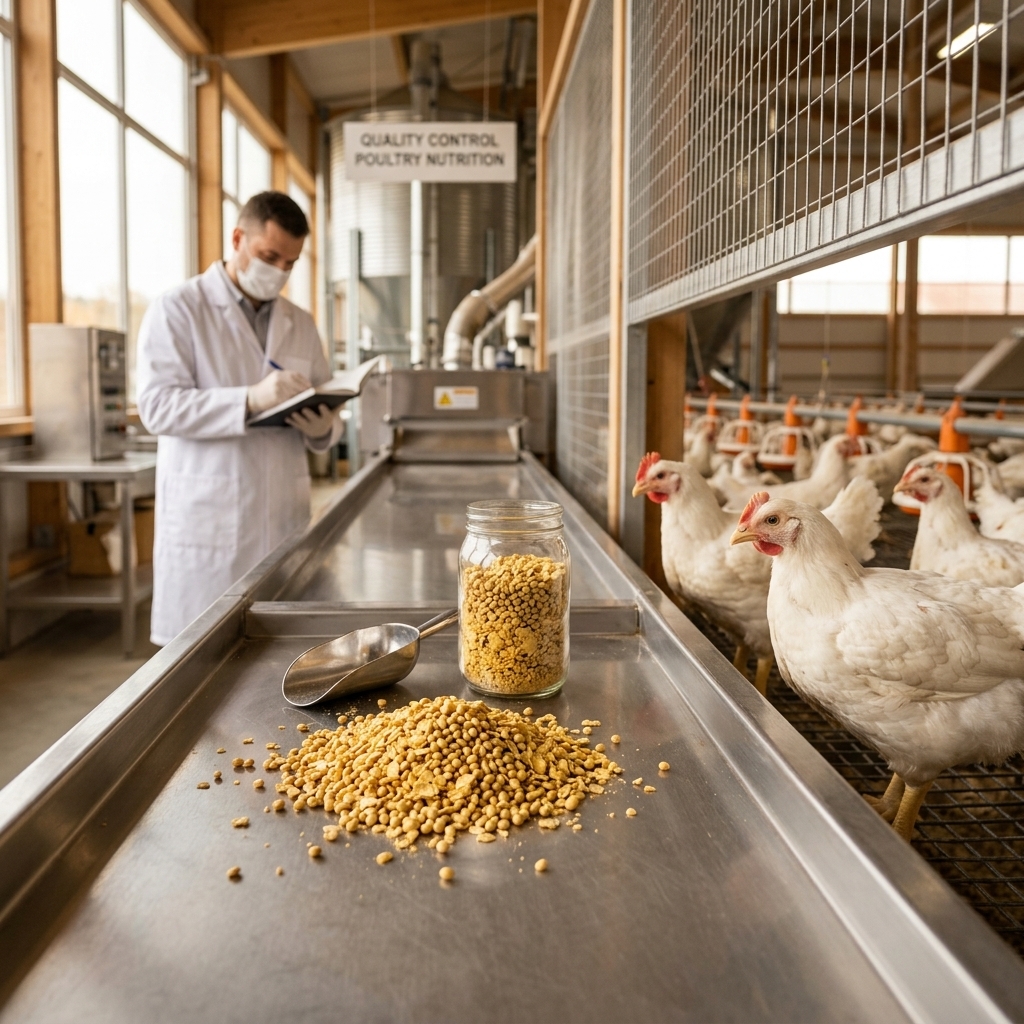
Soybean Meal Protein Standards for Poultry Feed
Tags
Share this article
France AJ Group explains the critical protein quality standards of soybean meal (SBM) for poultry feed — covering crude protein levels, amino acid profiles, anti-nutritional factors, and how to source certified SBM for optimal broiler and layer performance.
Soybean meal (SBM) is the most widely used protein source in commercial poultry feed worldwide. Accounting for approximately 65–70% of all protein ingredients in global poultry rations, SBM provides a near-ideal amino acid profile for broilers, layers, and breeders. However, not all soybean meal is created equal — and understanding the protein quality standards that separate premium SBM from substandard product is essential for feed millers, integrators, and livestock importers.
Through its UK wholesale division France AJ Group Ltd, France AJ Group supplies certified soybean meal to poultry feed manufacturers, animal nutrition companies, and agricultural distributors across Africa, the Middle East, and Asia. This guide breaks down everything a B2B buyer needs to know about SBM protein standards for poultry feed formulation.
Why Soybean Meal Dominates Poultry Nutrition
Soybean meal's dominance in poultry feed is not accidental — it is the result of a uniquely favorable combination of nutritional properties:
- High crude protein (CP): Standard SBM delivers 44–48% CP on an as-fed basis, depending on the grade and processing method.
- Superior amino acid balance: SBM provides the highest concentration of lysine among plant-based protein sources — the first-limiting amino acid in poultry diets.
- High digestibility: Properly processed SBM achieves amino acid digestibility coefficients of 85–92% in broilers, making nutrients highly available for growth and egg production.
- Consistent supply: Global soybean production exceeds 390 million tonnes annually (2025/26 season), ensuring year-round availability from major origins including Brazil, the United States, Argentina, and Paraguay.
- Competitive cost per unit of protein: Despite price fluctuations, SBM consistently offers the lowest cost per gram of digestible lysine compared to alternative protein sources such as fish meal, canola meal, or sunflower meal.
Soybean Meal Grades: 44% vs 48% Crude Protein
In international trade, soybean meal is classified into two primary grades based on crude protein content:
Standard SBM — 44% Crude Protein (with hulls)
This grade is produced by crushing soybeans and retaining the hull fraction in the final meal. The inclusion of hulls increases fiber content (typically 6–7% crude fiber) and slightly dilutes the protein concentration. Standard 44% SBM is widely used in:
- Layer and breeder diets where moderate fiber supports gut motility
- Cost-sensitive feed formulations where maximum protein density is not critical
- Ruminant feed and swine diets in mixed-use feed mills
High-Protein SBM — 48% Crude Protein (dehulled)
Dehulled SBM removes the outer seed coat before processing, resulting in a concentrated meal with higher protein (≥47.5% CP) and lower fiber (≤3.5% crude fiber). This grade is the preferred choice for:
- Broiler starter and grower diets: Where maximum amino acid density is essential for achieving target body weights within short grow-out cycles (35–42 days)
- High-performance layer diets: Formulated for peak egg production and eggshell quality
- Precision formulation systems: Where nutritionists need exact amino acid contributions with minimal variation between batches
Grade Comparison Table
| Parameter | Standard SBM (44%) | Hi-Pro SBM (48%) |
|---|---|---|
| Crude Protein (min) | 44.0% | 47.5–48.5% |
| Crude Fiber (max) | 7.0% | 3.5% |
| Moisture (max) | 12.0% | 12.0% |
| Fat (ether extract) | 1.0–2.0% | 0.5–1.5% |
| Ash | 6.0–6.5% | 5.8–6.5% |
| Lysine | 2.75% | 3.02–3.10% |
| Methionine | 0.62% | 0.67–0.70% |
| Threonine | 1.72% | 1.87–1.92% |
| Trypsin Inhibitor (TI) | ≤4.0 mg/g | ≤4.0 mg/g |
| Urease Activity (ΔpH) | 0.02–0.30 | 0.02–0.30 |
| KOH Protein Solubility | 73–85% | 73–85% |
Key Amino Acids for Poultry Performance
Crude protein alone does not determine feed value — the amino acid profile and digestibility are what truly matter in poultry nutrition. SBM excels because it delivers high concentrations of the essential amino acids that limit poultry growth and egg production:
Lysine — The First-Limiting Amino Acid
Lysine is the most critical amino acid in broiler and layer diets, directly influencing muscle deposition, feed conversion ratio (FCR), and breast meat yield. SBM provides 2.75–3.10% total lysine depending on grade, with standardized ileal digestibility (SID) coefficients of approximately 89–91% in broilers. No other plant protein matches SBM's lysine contribution per unit of inclusion.
Methionine — The Second-Limiting Amino Acid
While SBM's methionine content (0.62–0.70%) is lower relative to the bird's requirements, it still contributes significantly when combined with synthetic DL-methionine or methionine hydroxy analog (MHA) in practical diet formulation. Methionine is essential for feather development, immune function, and hepatic lipid metabolism.
Threonine — The Third-Limiting Amino Acid
SBM supplies 1.72–1.92% threonine, supporting intestinal mucin production, gut barrier integrity, and immune protein synthesis. Threonine adequacy is particularly important in antibiotic-free (ABF) poultry production systems where gut health is managed nutritionally.
Tryptophan and Valine
SBM also provides meaningful contributions of tryptophan (0.60–0.68%) and valine (2.10–2.30%), both of which are increasingly recognized as co-limiting amino acids in modern low-CP poultry diets formulated to reduce nitrogen excretion.
Anti-Nutritional Factors (ANFs): What Buyers Must Monitor
Raw soybeans contain several anti-nutritional factors that can impair poultry performance if not adequately deactivated during processing. Proper heat treatment (toasting) during SBM production is designed to eliminate these ANFs, but under-processing or over-processing both create problems:
Trypsin Inhibitors (TI)
TI activity must be reduced to ≤4.0 mg/g in properly processed SBM. Residual TI above this threshold causes pancreatic hypertrophy, reduced protein digestibility, and poor FCR in broilers. Buyers should request TI analysis on every lot.
Urease Activity (UA)
UA is measured as the pH rise (ΔpH) when SBM is incubated with urea solution. Acceptable UA for poultry-grade SBM is 0.02–0.30 ΔpH. Values below 0.02 may indicate over-processing (heat damage), while values above 0.30 suggest under-processing with residual ANF activity.
KOH Protein Solubility (PS)
KOH protein solubility is an indirect measure of protein quality and heat treatment adequacy. The target range for poultry-grade SBM is 73–85%. Solubility below 73% indicates over-processing — meaning the protein has been heat-damaged, reducing amino acid availability, particularly lysine (Maillard reaction). Solubility above 85% suggests under-processing.
Lectins and Oligosaccharides
Soybeans contain lectins (hemagglutinins) that are effectively destroyed during standard toasting. Oligosaccharides — primarily stachyose and raffinose — are not eliminated by heat but are present in manageable concentrations in standard SBM. Enzyme supplementation (α-galactosidase) can further improve energy utilization from SBM in poultry diets.
Quality Testing: What to Request From Your Supplier
When sourcing soybean meal for poultry feed manufacturing, buyers should request the following quality documentation on every shipment:
- Certificate of Analysis (COA): Confirming crude protein, moisture, crude fiber, fat, ash, urease activity, and trypsin inhibitor levels
- Amino acid profile: Total and digestible amino acid values (lysine, methionine, cystine, threonine, tryptophan as minimum)
- KOH protein solubility report: Target 73–85%
- Mycotoxin screening: Aflatoxin B1 (≤20 ppb), DON, zearalenone, and fumonisin levels — critical for tropical-origin SBM
- GMO declaration: Required for EU-destined shipments and certain Middle Eastern markets
- Phytosanitary Certificate: Standard requirement for cross-border agricultural commodity trade
- SGS or Bureau Veritas pre-shipment inspection: Recommended for first-time origins and large volume contracts
Global Sourcing: Where the Best SBM Comes From
The origin of soybean meal significantly impacts its protein content, processing quality, and pricing:
Brazil
Brazil is the world's largest soybean producer and exporter, with annual production exceeding 160 million tonnes (2025/26 crop). Brazilian SBM is available in both 44% and 48% grades, predominantly non-GMO and GMO varieties. Through France AJ Group Ltd, the Group sources directly from certified crushers in Mato Grosso, Paraná, and Goiás.
United States
US-origin SBM is predominantly 48% Hi-Pro dehulled grade, sourced from the Midwest soybean belt. US SBM is almost exclusively GMO (>94% of US soybean acreage), making it unsuitable for non-GMO markets but competitively priced for feed manufacturers without GMO restrictions.
Argentina
Argentina is a major SBM exporter, primarily offering 44% standard grade from its crushing facilities in Rosario and the Paraná River corridor. Argentine SBM is competitively priced and widely used in African and Middle Eastern feed markets.
Paraguay
Paraguayan SBM offers a growing non-GMO option for buyers requiring identity-preserved (IP) certified soybean meal. Volumes are smaller than Brazil or Argentina but are increasing with expanded crushing capacity.
How France AJ Group Supplies Poultry-Grade Soybean Meal
Through France AJ Group Ltd, France AJ Group maintains direct supply relationships with certified soybean crushers and trading partners across South America. Our B2B clients benefit from:
- Competitive FOB and CIF pricing on confirmed volume contracts (bulk vessel, container, or bagged)
- Flexible packaging options: 50 kg PP bags, 1 MT jumbo bags, or bulk vessel shipments
- Full documentation package: COA, amino acid profile, phytosanitary certificate, bill of lading, GMO declaration, and third-party inspection reports
- HALAL certification available upon request for Muslim-majority markets
- Origin flexibility: Brazil, Argentina, Paraguay, or US origin depending on buyer requirements and market access rules
- Dedicated trade support for LC, TT, and CAD payment structures
"Soybean meal is the backbone of modern poultry nutrition, but protein percentage alone doesn't tell the full story. Amino acid digestibility, anti-nutritional factor control, and batch-to-batch consistency are what separate premium SBM from commodity-grade product. At France AJ Group, we source only from certified crushers with verified quality control systems." — France AJ Group Representative
About France AJ Group & France AJ Group Ltd
France AJ Group is an international B2B trading conglomerate with operations spanning food commodities, animal feed ingredients, building materials, electric vehicles, lubricants, and luxury goods. With a global presence across Europe, Africa, Asia, the Middle East, and the Americas, the Group builds reliable trade flows through specialized divisions combining global sourcing with local market expertise.
France AJ Group Ltd, the Group's UK-based wholesale division, specializes in the B2B wholesale supply of agricultural commodities including soybeans, soybean meal, grains, edible oils, sugar, frozen meats, rice, and beans — serving B2B buyers, feed manufacturers, wholesalers, and distributors across multiple continents.
Read More
Related Articles
Food & Agriculture
Crude Soya Oil Exports to Morocco: France AJ Group Market Entry
France AJ Group, through its food division France AJ Alimentaire, launches a strategic initiative to supply crude soya oil to Morocco, supporting local refining, food security, and industrial growth.

Events & Exhibitions
France AJ Alimentaire to Showcase at Saudi Food Manufacturing 2025 in Riyadh
France AJ Alimentaire announces its participation in Saudi Food Manufacturing 2025 in Riyadh, presenting HALAL-certified food products and B2B solutions for the Middle East food industry.

Events & Exhibitions
France AJ Alimentaire at The Saudi Food Show 2025, Riyadh
France AJ Alimentaire joins The Saudi Food Show 2025 in Riyadh, presenting HALAL-certified food products and B2B solutions for the Middle East food industry.
Want to Learn More?
Explore our companies and discover how France AJ Group can support your business needs
Explore Our Companies