Business & Trade
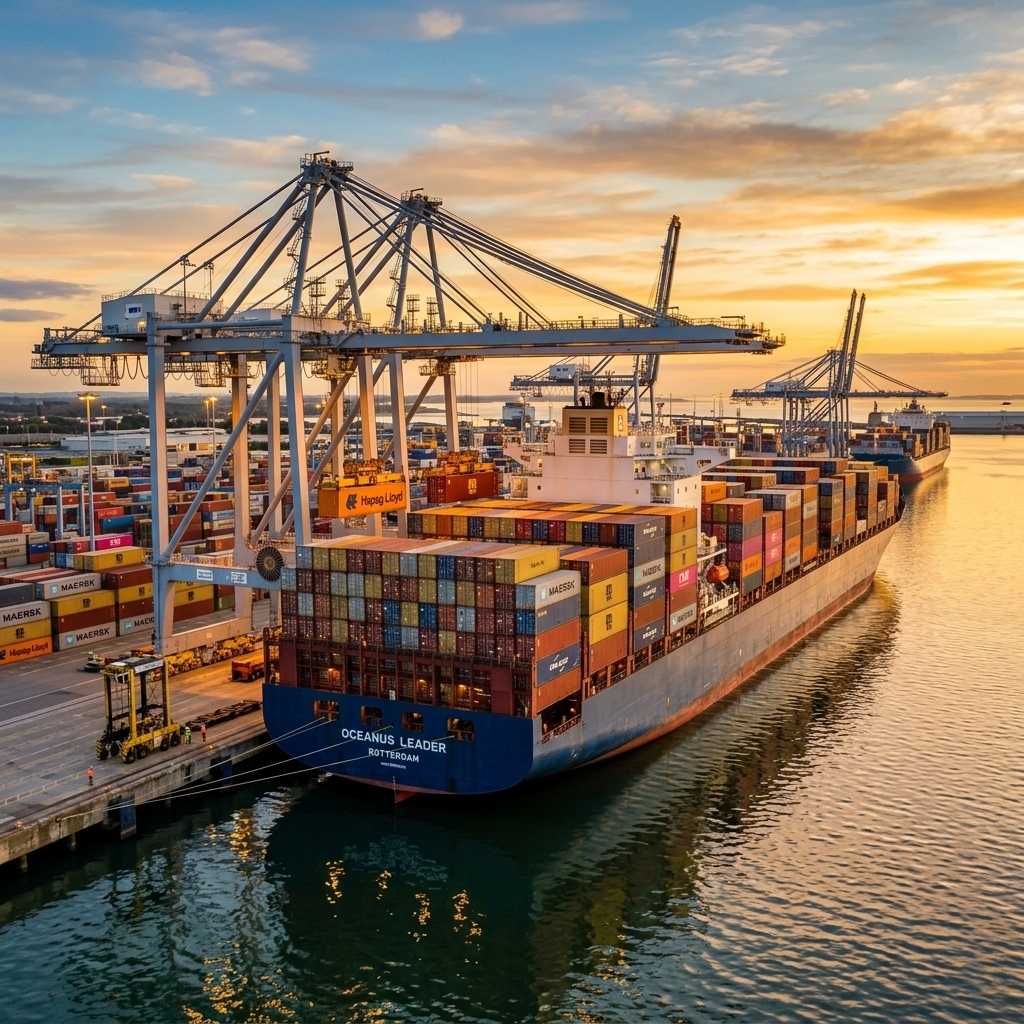
FOB vs. CIF vs. EXW: An Importer's Guide to Incoterms and Shipping Logistics
Tags
Share this article
France AJ Group explains the most important Incoterms for international trade — FOB, CIF, EXW, CFR, and DDP — and how B2B importers can choose the right shipping terms to protect their business and control costs.
One of the most misunderstood aspects of international trade is Incoterms — the standardized commercial terms published by the International Chamber of Commerce (ICC) that define the responsibilities, risks, and costs between buyers and sellers in cross-border transactions. Choosing the wrong Incoterm can expose an importer to unexpected costs, insurance gaps, or logistical liabilities that erode margins and delay deliveries.
As an international B2B trading group operating across food commodities, building materials, vehicles, and more, France AJ Group works with every major Incoterm daily. This guide breaks down the five most commonly used terms and explains which one is right for your business.
What Are Incoterms?
Incoterms (International Commercial Terms) are a globally recognized set of 11 standardized trade terms that define:
- Who pays for shipping, insurance, customs clearance, and port charges
- Where risk transfers from seller to buyer during the shipment journey
- Who handles export/import documentation, loading, and unloading
The current version is Incoterms® 2020, published by the ICC and used in virtually every international sales contract worldwide.
EXW — Ex Works (Seller's Premises)
What it means: The seller makes the goods available at their own premises (factory, warehouse). The buyer is responsible for everything from that point — loading, inland transport, export clearance, ocean freight, insurance, import clearance, and delivery to final destination.
Risk transfer: At the seller's premises.
Best for: Experienced importers with their own freight forwarding teams who want maximum control over the logistics chain. Not recommended for first-time importers or buyers unfamiliar with the export country's customs procedures.
FOB — Free on Board (Named Port of Shipment)
What it means: The seller delivers the goods on board the vessel at the named port of shipment. The seller handles export customs clearance and loading costs. The buyer takes over responsibility once the goods are on the ship — including ocean freight, marine insurance, and import clearance.
Risk transfer: When goods cross the ship's rail at the port of loading.
Best for: Buyers who have negotiated competitive freight rates with their own shipping lines or freight forwarders. FOB pricing allows the buyer to control shipping costs and choose their preferred carrier, route, and insurance coverage.
CFR — Cost and Freight (Named Port of Destination)
What it means: The seller pays for the cost of goods and ocean freight to the named destination port. However, risk transfers to the buyer at the port of loading — meaning the buyer carries the risk during the sea voyage even though the seller paid the freight.
Risk transfer: At the port of loading (same as FOB).
Best for: Buyers who want the convenience of the seller arranging freight but must independently arrange their own marine cargo insurance. Common in bulk commodity trades (sugar, rice, oil).
CIF — Cost, Insurance and Freight (Named Port of Destination)
What it means: The seller pays for the goods, ocean freight, and marine cargo insurance to the named destination port. The buyer takes responsibility at the destination port for unloading, import customs clearance, and inland delivery.
Risk transfer: At the port of loading — the seller insures the goods during transit on behalf of the buyer.
Best for: First-time importers, small-to-medium buyers, and businesses that want a simple, all-inclusive price quote up to the destination port. CIF is the most commonly used Incoterm in Africa and the Middle East.
DDP — Delivered Duty Paid (Named Place of Destination)
What it means: The seller takes on maximum responsibility — delivering the goods to the buyer's premises or named place with all duties, taxes, and import clearance costs included. The buyer simply receives the goods.
Risk transfer: At the buyer's named destination.
Best for: Buyers who want zero involvement in logistics and customs. DDP is common in e-commerce, small parcel shipments, and transactions where the seller has established local presence in the buyer's country.
Side-by-Side Comparison
| Responsibility | EXW | FOB | CFR | CIF | DDP |
|---|---|---|---|---|---|
| Export customs | Buyer | Seller | Seller | Seller | Seller |
| Inland transport (origin) | Buyer | Seller | Seller | Seller | Seller |
| Loading on vessel | Buyer | Seller | Seller | Seller | Seller |
| Ocean freight | Buyer | Buyer | Seller | Seller | Seller |
| Marine insurance | Buyer | Buyer | Buyer | Seller | Seller |
| Import customs | Buyer | Buyer | Buyer | Buyer | Seller |
| Delivery to destination | Buyer | Buyer | Buyer | Buyer | Seller |
"Understanding Incoterms is fundamental to managing procurement costs and supply chain risk. At France AJ Group, we offer flexible pricing across FOB, CIF, CFR, and DDP terms to match our clients' operational capabilities and risk appetite." — France AJ Group Representative
About France AJ Group
France AJ Group is an international B2B trading conglomerate with operations spanning food commodities, electric vehicles, lubricants, and building materials. With a global presence across Europe, Africa, Asia, the Middle East, and the Americas, the Group supports importers with flexible trade terms, full documentation, and reliable logistics on every transaction.
Read More
Related Articles

Food & Agriculture
Crude Soya Oil Exports to Morocco: France AJ Group Market Entry
France AJ Group, through its food division France AJ Alimentaire, launches a strategic initiative to supply crude soya oil to Morocco, supporting local refining, food security, and industrial growth.

Events & Exhibitions
France AJ Alimentaire to Showcase at Saudi Food Manufacturing 2025 in Riyadh
France AJ Alimentaire announces its participation in Saudi Food Manufacturing 2025 in Riyadh, presenting HALAL-certified food products and B2B solutions for the Middle East food industry.
Events & Exhibitions
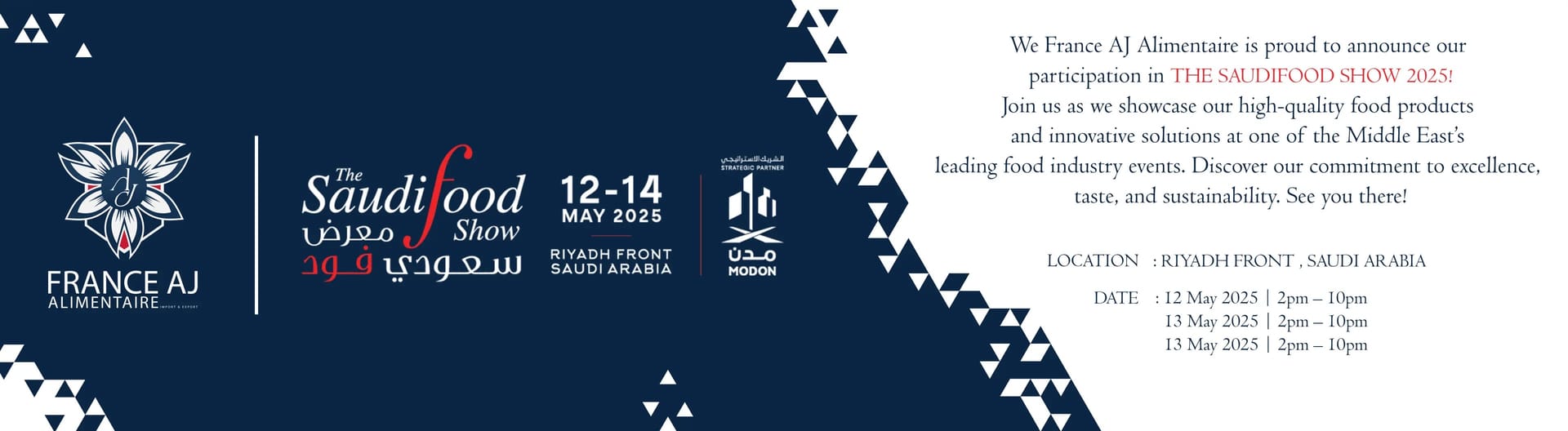
France AJ Alimentaire at The Saudi Food Show 2025, Riyadh
France AJ Alimentaire joins The Saudi Food Show 2025 in Riyadh, presenting HALAL-certified food products and B2B solutions for the Middle East food industry.
Want to Learn More?
Explore our companies and discover how France AJ Group can support your business needs
Explore Our Companies